
Stafford Parole and Probation Compared
Virginia separates the agency that decides parole from the agency that supervises a person in the community. The Virginia Parole Board decides parole in the cases that remain legally eligible. Virginia Department of Corrections Community Corrections then supervises state probationers, parolees, and people on post-release supervision. A Stafford judge may also place someone on probation without a prison release. The legal order matters more than the broad label used in casual speech.
RRJ has its own Community-Based Probation program for eligible local court placements. It is separate from state supervision. RRJ Pretrial Services also monitors some defendants before judgment, and work release requires a person to return to custody after an approved schedule. Those statuses should not be collapsed into parole.
| Status | Who authorizes it | Where to verify |
|---|---|---|
| Parole | Virginia Parole Board for an eligible sentence | Board decision report, VADOC locator, and District 21 |
| State probation or post-release supervision | Court order and Virginia law | Sentencing order, VADOC locator, and District 21 |
| Community-Based Probation | Qualifying local court placement | Controlling order and RRJ Community Corrections |
| Pretrial supervision | Court release before final judgment | Current court order and RRJ Pretrial Services |
- Parole
- Conditional release from an eligible prison sentence under Board authority.
- Probation
- Court-ordered community supervision that may replace or follow confinement.
- Discharge
- The formal end of custody or supervision under the controlling sentence and order.
- Absconder
- A person alleged to have stopped reporting or complying, not proof of a new conviction.
Verify Stafford Post-Release Supervision
Start with the person, sentence, and last known custodian. A short RRJ sentence may lead to local supervision. A state prison sentence may lead to a VADOC district office. The public Inmate and Supervisee Locator can show a community corrections location, which means supervision rather than incarceration. It does not cover every local placement or serve as a permanent archive of fully discharged people.
- Search by the VADOC number when known, or enter the full first and last name.
- Compare identity details and open the matching record rather than relying on a name alone.
- Read the location literally. District 21 is a supervision office, not a prison.
- Check the Stafford sentencing or release order to identify the type and term of supervision.
- Contact the listed office for public confirmation while avoiding requests for protected case-plan or treatment details.
- If the record appears complete, ask for the discharge order or agency record that formally ended supervision.
A person missing from the locator is not automatically discharged. The person may have been supervised only by RRJ Community-Based Probation, may be fully discharged, or may not match the entered name. The broader Stafford County released-inmate search path explains how to compare RRJ, court, VADOC, VINE, federal, and ICE records without treating one no-result as proof.
Stafford Supervision at District 21
Fredericksburg District 21 is Stafford County's state probation and parole office. VADOC lists it as serving Stafford, Spotsylvania, King George, and Fredericksburg. The District 21 resource directory also lists a Stafford sub-office, but the main facilities directory provides the Fredericksburg office as the public district contact. Call before relying on a location for an in-person visit.
VADOC Fredericksburg District 21
5620 Southpoint Centre Boulevard, Suite 110
Fredericksburg, VA 22407
540-710-2102
State probation, parole, and post-release supervision for Stafford County
District 21 Stafford Sub-Office
85 Mine Road
Stafford, VA 22554
540-658-3570
Confirm the correct reporting site with District 21
The VADOC facilities and offices directory is the source for service area and office details. Its District 21 display is visible in the captured official page below.
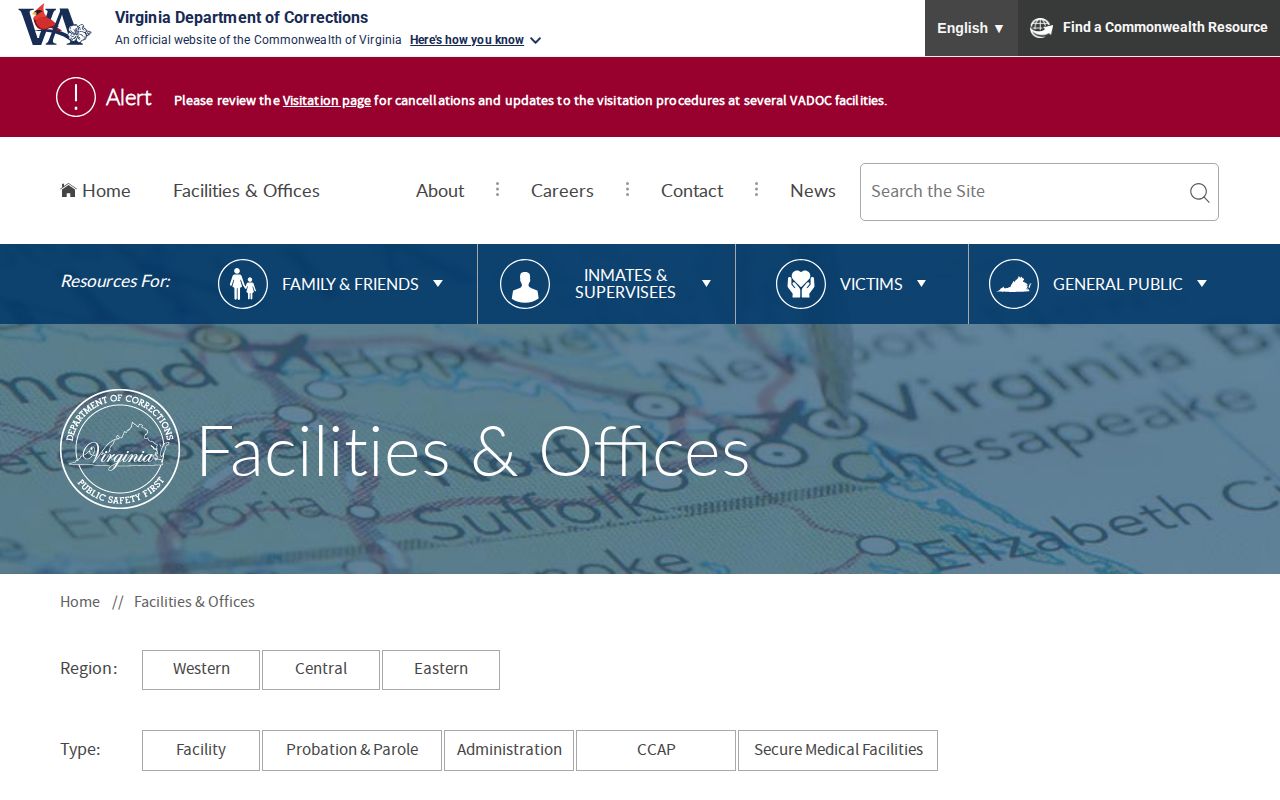
The office card helps confirm the supervising district, but it does not disclose a person's conditions or prove the date someone left RRJ.
Stafford Local Supervision Map
Stafford County has a two-level supervision map that is easy to misread. VADOC District 21 manages state probation, parole, and post-release supervision. RRJ Community-Based Probation handles qualifying local court cases. Pretrial Services is a third track for people released while a case is still pending. Home electronic monitoring can also permit a person to live outside the jail while remaining subject to a court or corrections placement.
Work release is different again. A participant leaves for an approved activity but must return to RRJ, so that person remains in custody. A District 21 locator result says that the person is under state community supervision. It does not establish an earlier RRJ gate time. Likewise, an RRJ Community-Based Probation placement should not be called state parole. Confirm the program name on the court order or supervising-agency record.
Note: Living outside the jail may reflect supervision, pretrial release, or monitoring rather than a full discharge from all legal obligations.
Stafford Community Corrections Programs
RRJ operates a local continuum tied to Stafford courts. Pretrial Services supports release before a final judgment. Community-Based Probation is a post-sentence placement for qualifying local cases. Home electronic monitoring changes where a person stays while keeping court or corrections controls in place. Adult Drug Treatment Court adds a treatment-focused court track, and work release permits only approved trips followed by a return to RRJ.
These program names describe legal status, not just location. A person outside the building on pretrial release has not been discharged from the case. A Community-Based Probation participant is not automatically a VADOC probationer. A work-release participant remains in custody. To verify the record, pair the named program with the Stafford order and the RRJ department responsible for it. That local evidence is more precise than assuming all community status belongs to District 21.
Stafford Parole Decision Records
Ordinary discretionary parole was abolished for most Virginia felonies committed on or after January 1, 1995. Many current state releases therefore occur when a sentence expires with applicable credits, followed by any ordered supervision. Older sentences and statutory exceptions can remain parole eligible. Code of Virginia § 53.1-151 contains eligibility rules, exclusions, and special categories. It should be read for the governing offense date rather than reduced to one rule.
The Board posts monthly decisions and annual reports on its Parole Reports page. Reports may show grants, not-grants, votes, and reasons. A grant is authorization, not proof of physical release. Release planning, conditions, sentence calculation, and other detainers can still affect when the person leaves VADOC custody.
The official Virginia Parole Board portal below shows the decision and review routes available for Virginia cases.
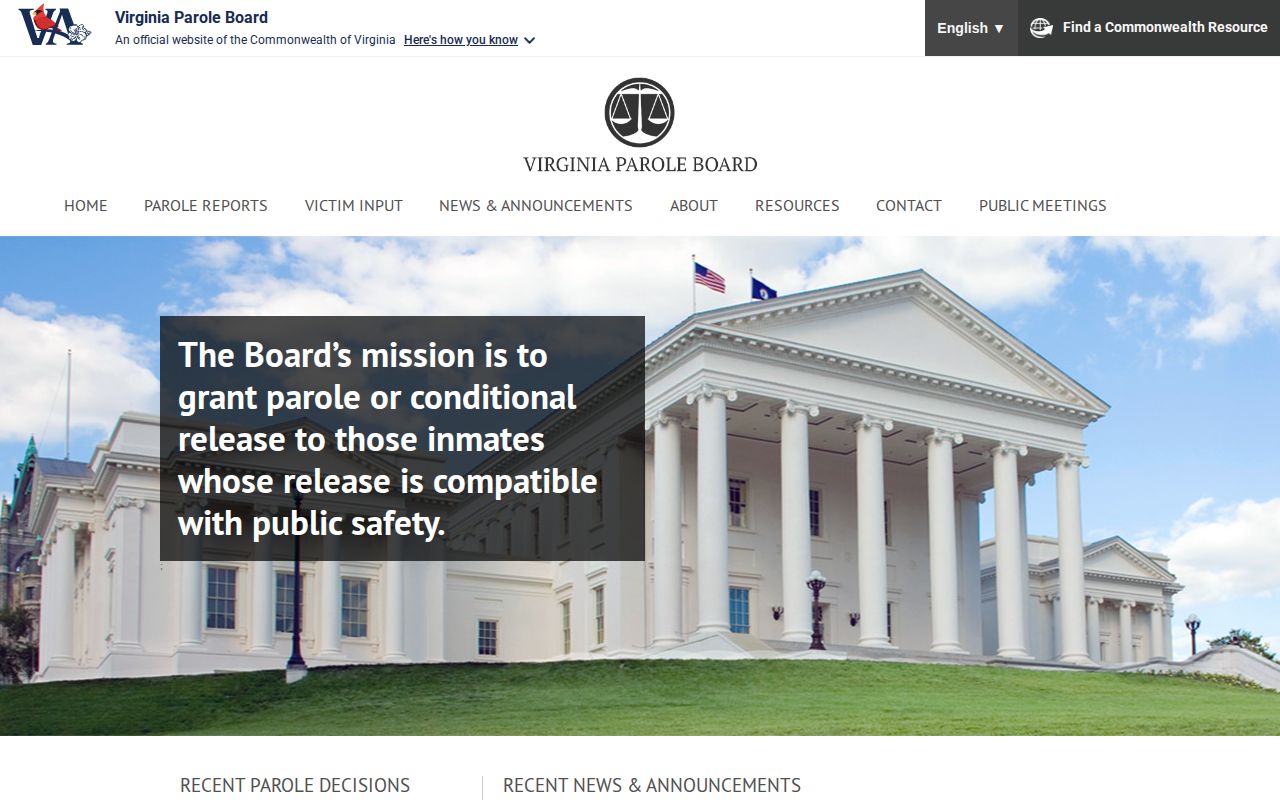
Use the exact outcome printed in the applicable report, then verify actual release through VADOC records or the locator.
Stafford Supervision Violations and Warrants
Supervision conditions come from the court order, parole terms, and agency rules. They can include reporting, approved travel, lawful conduct, and program participation, but the exact terms are person-specific. A claimed violation may lead to a hearing, a warrant, added conditions, or revocation. Revocation means that a court or authorized body withdraws all or part of the community status after due process. It should not be inferred from an online rumor or missed meeting.
No official Stafford-specific public parole absconder list was found. An absconder label means the agency alleges the person stopped reporting or complying. It does not establish a new conviction or tell where the person is. Verify an active warrant through the proper court or law-enforcement channel, and check Board violation decisions only when the report actually covers that person. Virginia VINE reports custody events, not the full state supervision case plan.
Stafford Release Property and Records
RRJ property rules can matter after release or transfer. At a scheduled community release, the Processing Division returns inventoried personal property. For a transfer, only property accepted by the receiving facility travels. RRJ says disallowed property may be held for 30 days and uses a Disposition of Personal Property form. A designated third party may use the posted Monday through Saturday morning pickup window, and release-clothing exchanges use that same window.
This local process is separate from parole or probation. Property pickup does not prove discharge, and a supervision record does not show what happened to stored items. When a criminal-history entry appears inaccurate, Code of Virginia § 9.1-132 provides a route for a person to inspect and challenge their own state criminal-history record for completeness and accuracy. Corrections to a jail, court, or supervision record must still go to the office responsible for that record.
Stafford Supervision Discharge Records
Supervision ends through the authority stated in the sentence, release papers, or later discharge action. A projected end date is not the same as a completed discharge. The best proof is an agency discharge record or court order paired with a locator result that no longer shows active supervision. Keep a copy of the signed conditions and any closing notice because an online tool may change after the case ends.
For VADOC records, provide the person's state number, full name, and approximate dates. A fully discharged person may require the agency's inactive-offender records route because the public locator describes people under current custody or supervision. For local Community-Based Probation, ask RRJ Community Corrections and the deciding Stafford court for the existing order or completion entry. Each source answers a different part of the record.
A release from prison and a discharge from supervision may occur years apart. Keep the two dates labeled. The prison release letter proves the custody transition, while the later discharge action proves the supervision term ended. If the public locator changes after discharge, retain the official closing record and the court order rather than relying on an old screenshot alone.